Collection: Overdrive pedal
Welcome to our category for overdrive effect pedals – perfect for guitar and bass . Here you'll find a selection of boutique overdrive pedals.
Our overdrive pedals are ideal for genres like blues , rock , metal , and indie , offering versatile options for shaping your individual sound. Whether you're looking for a low-gain overdrive for subtle amplification or powerful, singing lead sounds for your solos – you're guaranteed to find what you need in this category.

-
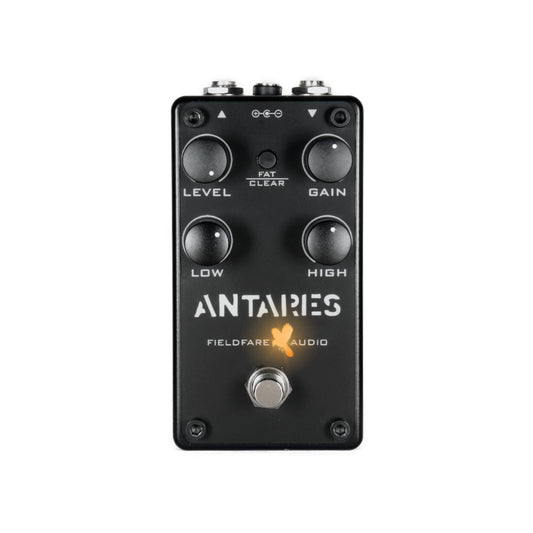
Antares - Overdrive Pedal
4.8 / 5.0
(5) 5 total reviews
Regular price €189,00 EURRegular priceUnit price / perSale price €189,00 EUR -
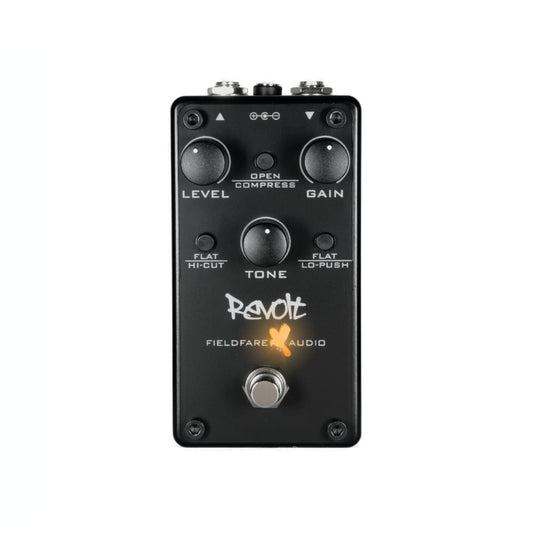
Revolt - Tube Screamer, Overdrive Pedal
5.0 / 5.0
(5) 5 total reviews
Regular price €159,00 EURRegular priceUnit price / perSale price €159,00 EUR
Frequently asked questions about overdrive pedals?
What does an overdrive pedal do?
An overdrive pedal is an effects unit for electric guitars that produces light to medium distortion. It simulates the sound of an overdriven amplifier, making the guitar tone warmer, fuller, and slightly overdriven. The effect also reacts strongly to the guitarist's playing style, so the sound becomes more distorted with a harder attack and remains cleaner with a softer touch.
What does an overdrive effect pedal do?
An overdrive effect pedal alters the guitar signal to produce a natural and musical distortion. This makes the tone fuller and gives it more sustain without sounding too aggressive. At the same time, an overdrive can also be used to drive an amplifier harder, resulting in a more powerful and assertive overall sound.
Which distortion pedals are the best?
Which distortion pedals are considered the best depends heavily on the musical style and personal taste. Overdrive pedals are often preferred for blues and classic rock because they deliver a warm and dynamic sound. Distortion pedals are frequently used for heavier musical styles, as they produce a stronger and more aggressive distortion. Fuzz pedals are often used for particularly extreme and raw sounds. Therefore, there is no single best pedal, but rather those that are better suited to specific genres.
How do you use the overdrive pedal?
An overdrive pedal is typically placed in the signal chain between the guitar and the amplifier. Most pedals have controls for distortion, tone, and volume. Guitarists can use these to adjust the amount of distortion, the brightness or darkness of the sound, and the signal output volume. Overdrive is also often used with relatively little distortion and higher volume to further drive the amplifier.
Does delay come after the overdrive pedal?
Yes, delay is usually placed after overdrive in most effects chains. This means the guitar's basic sound is distorted first and then repeated by the delay. If you placed delay before the distortion, the repeated sounds would also be distorted, often resulting in a less clear and controlled tone.
Which is better, overdrive or distortion?
Whether overdrive or distortion is better depends on the desired sound. Overdrive is particularly well-suited for warmer and more dynamic sounds in blues or classic rock. Distortion produces a stronger and more aggressive distortion and is therefore frequently used in hard rock or metal. Both effects thus serve different musical purposes.
What is the difference between overdrive and distortion?
The main difference lies in the intensity and character of the distortion. Overdrive produces a softer and more natural distortion, similar to the sound of a slightly overdriven amplifier. Distortion, on the other hand, distorts the signal more strongly and evenly, resulting in a denser, more aggressive, and more compressed sound.
Which pedals are suitable for metal?
Metal musicians typically use effects pedals that produce strong and precise distortion. These include primarily distortion pedals or heavily distorted amplifiers. Many guitarists also use an overdrive pedal as a boost to tighten up the sound and achieve greater presence. Additional effects such as noise gates, equalizers, or delays are frequently employed to make the sound clearer and more controlled.